Article I, Section 8, of the Constitution of the United States is arguably the most important, yet underappreciated portion of our founding charter. It defines the powers of Congress in some very specific areas, granting sole authority to Congress to direct and regulate the formal actions of the republic.
It reads, in part:
The Congress shall have Power To lay and collect Taxes, Duties, Imposts and Excises, to pay the Debts and provide for the common Defence and general Welfare of the United States; but all Duties, Imposts and Excises shall be uniform throughout the United States;
To borrow Money on the credit of the United States;
To regulate Commerce with foreign Nations, and among the several States, and with the Indian Tribes;
To establish an uniform Rule of Naturalization, and uniform Laws on the subject of Bankruptcies throughout the United States;
To coin Money, regulate the Value thereof, and of foreign Coin, and fix the Standard of Weights and Measures;
To provide for the Punishment of counterfeiting the Securities and current Coin of the United States;
To establish Post Offices and post Roads;
To promote the Progress of Science and useful Arts, by securing for limited Times to Authors and Inventors the exclusive Right to their respective Writings and Discoveries;
To constitute Tribunals inferior to the supreme Court;
To define and punish Piracies and Felonies committed on the high Seas, and Offences against the Law of Nations;
To declare War, grant Letters of Marque and Reprisal, and make Rules concerning Captures on Land and Water;
There is more, but these excerpted clauses of Article I, Section 8, clearly provide Congress with the lawful authority to:
- Regulate trade and commerce with foreign nations;
- Impose tariffs and other taxes and duties;
- Advance immigration and naturalization (echoing the Declaration of Independence, which treats obstructing immigration as a crime against all Americans);
- Decide whether cryptocurrencies, for instance, can be used as financial assets, or for lawful commercial payments;
- To support the everyday communication of Americans with each other and with the wider world (the Constitution does not recognize control of communications as an Executive authority);
- Provide active support to the advancement of science (no part of the Constitution allows anyone in any branch of government to obstruct the progress of science or to corrupt the publication of evidence);
- To decide whether specific international crimes are punishable and by what means;
- To decide if the nation will wage war.
None of these authorities are granted to the President. The Executive branch of government has no lawful authority to take unilateral action in any of these areas. All Executive actions in any of these areas must take place within the defined authorities granted by the Constitution or by laws enacted by Congress.
Further to this point: The Constitution does not grant Congress the authority to transfer legislative powers to the President, nor does it grant such authority to the Supreme Court. The Supreme Court is independent of the other two branches, but like them must abide by the Constitution and cannot grant its own lawful authority to the other branches.
So, let’s look at that list again:
- The President’s attempt to “suspend trade” with Spain as a coercive measure or as punishment for what he perceives as a personal criticism or offense, is unlawful.
- The President’s unilaterally imposed tariffs, without any authorization from Congress or any factual circumstances fitting the conditions laid out in established law, are unlawful.
- The President’s efforts to unilaterally reconfigure the entire body of American immigration law and jurisprudence, is unlawful. Furthermore, actions that violate the Bill of Rights (for instance, the 4th Amendment prohibition against unwarranted search and seizure, the 5th Amendment’s prohibition on depriving anyone of life or liberty without due process, and the 8th Amendment’s prohibition on cruel punishments), no matter who is being targeted, are unlawful.
- The President establishing unilaterally that certain cryptocurrencies can be used for international business transactions, to hold financial assets, or even to take payment into his own or his family’s accounts, in connection with his interactions with foreign officials and businesses in the course of his service as President, is unlawful.
- The President’s interference in the everyday communication of Americans with each other, whether through the Postal Service or through the Internet, or by coercion of publishers and broadcasters, with the specific and often stated aim of punishing dissent and favoring people aligned with his personal priorities, is unlawful. Of course, the First Amendment also makes such interference illegal.
- The President’s efforts to dismantle major science endeavors, to corrupt the publication of scientific evidence, and to undermine the people’s access to the benefits of independent, evidence-based scientific study and reporting, are unlawful.
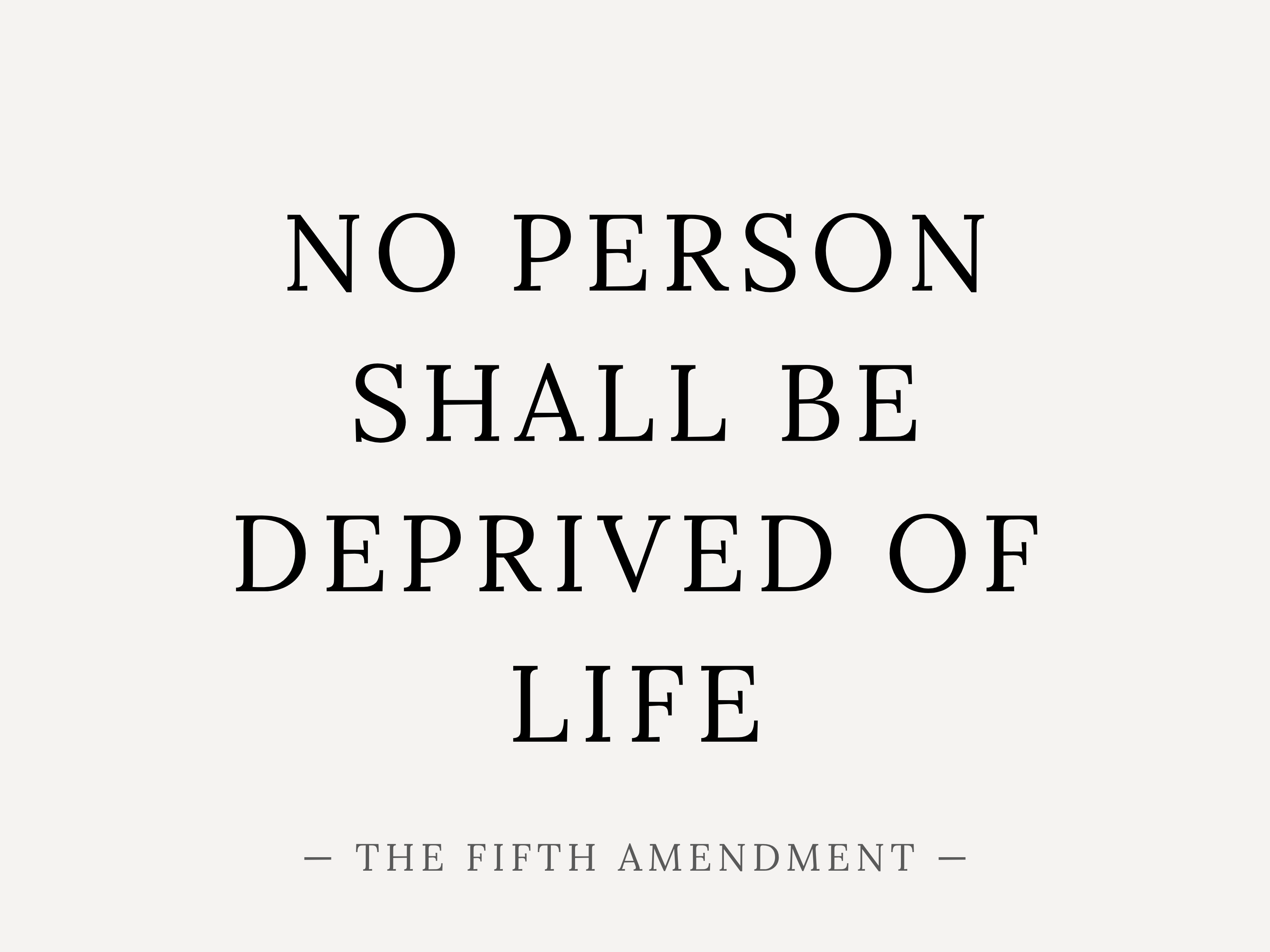
- The President’s orders resulting in the killing of civilians in boats in international waters by missile strike, are unlawful. They also directly contravene the 5th Amendment’s absolute prohibition on the taking of life without due process.
- The President’s unilateral decision to wage full-scale war against Iran, without explicit Congressional authorization for those actions, were unlawful. (This is why Congress has now formally ordered an end to those operations.)
Beyond the fact that these actions are unlawful and directly contravene the clear language of the Constitution, neither Congress nor the Supreme Court are granted lawful authority to recognize any of these actions as Executive powers.
Agencies created by Congress cannot be uncreated, dismantled, or have their funding seized by the President. This power is rooted in Article I, but is further clarified in Article II (which defines the scope of Executive authority). Article II, Section 2, notes that Congress may grant the President authority to hire and fire, but need not do so; Congress can, instead, make agencies independent of Presidential fiat.
Democracy is founded on the recognition that use of public authority must be constrained by the rule of law. It is the nature of a republic that political leaders hold office temporarily and must, in all of their actions, act with honor and integrity as servants of the public.
The next quarter millennium of American democracy will depend on the people re-establishing legally defined, common-sense constraints on the exercise of executive authority. The President is an administrator and servant of the rest of society, not a ruler. The President cannot even claim authority to define American greatness; that is done in the mission statement at the top of the Constitution:
- Establish justice;
- Promote the general welfare;
- Keep improving;
- Serve future generations.
All of that must be done while honoring human rights as universal and unalienable. This is our shared project. Presidents are not allowed to steer us off course; Congress has actual authorities designed to make sure of that.
 The Faithful Citizen